
新警察故事China-made EVs win a growing number of European consumers, despite EU’s levying unfair tariffs_我的网站
A | Raashii Khanna has recently shared an update on the thriller series Farzi's sequel Farzi 2. During an exclusive interview with Filmfare, Raashii shared that the second season is going to go on floors soon. The actress noted, "We are starting shoot in the beginning of next year. I don't know when it will release." When asked if she is excited about her character and her journey in the next season, Raashii said, "I don't know what will happen to Megha. I keep asking, 'Does Megha know Sunny was behind all these?' My questions will be answered when I see the script next year."Apart from working on Farzi 2, Raashii also shared about collaborating with Vikrant Massey again on Talaakhon Mein Ek. Calling it one of her best movies, Raashii added, "It has a lot of soul. It is something people will really relate to. It was an absolute treat to work with Vikrant on that film. It tested me as an actor and I can't wait for it to come. It is one of the finest works that I have done." Coming back to Farzi, audiences have loved the first season and hailed the series as one of Raashii's bests. During an interview with Firstpost, Shahid Kapoor had once said, "I have literally lived that life of Sunny in reality. People get surprised though, but my life has been full of struggles. I used to travel by train, had very limited money and used to go and dance in Shamak Davar’s class. I can really understand the frustration of my character in Farzi. You just dance and dance and nobody wants to really give you a chance. You dance somewhere in the back."Also Read: Exclusive: Bhuvan Arora On Janaawar, Farzi Memories, And His Dream Of Doing A Superhero Film。 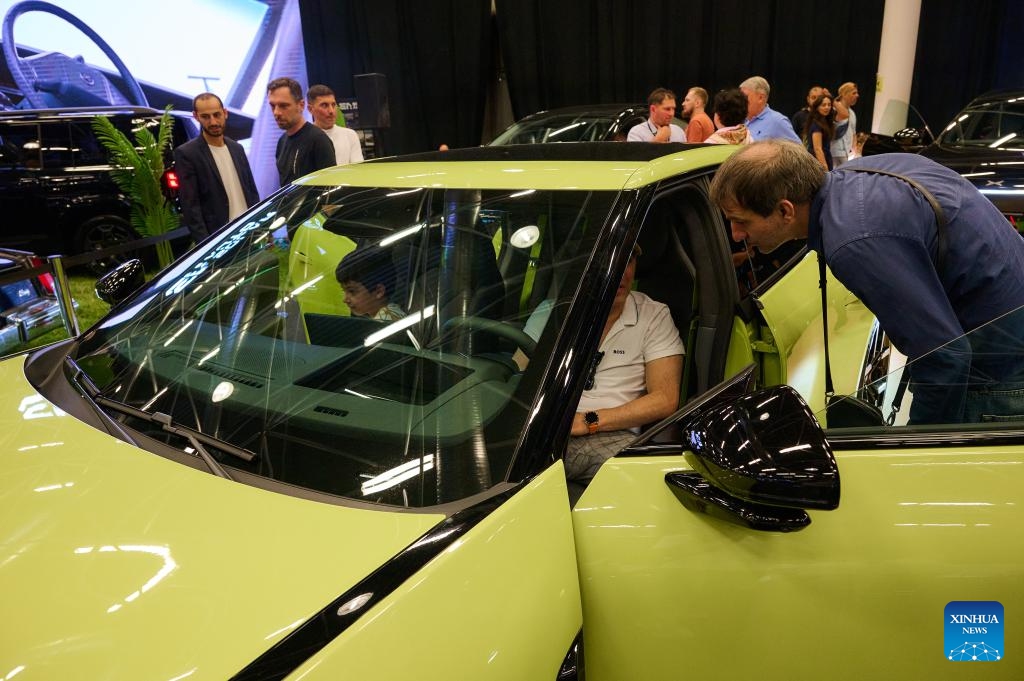 China-made electric vehicles (EVs) accounted for 14.2 percent of European market sales in the first five months of 2026 despite the EU's steep tariffs. The growth showed that trade‑protectionist barriers can only serve as short‑lived obstacles, as consumers' purchasing choice ultimately hinges on product competitiveness and China's EV strengths will support the automakers' long‑term growth, Chinese experts said. The market share of electric cars sold by Chinese companies rose to 14.2 percent in European market in the first five months of this year, according to Schmidt Automotive Research. The 171,800 EVs sold there represented an increase in market share of five percentage points from one year earlier, the Guardian reported on Sunday. The increase in European sales comes despite EU tariffs of up to 35.3 percent for EVs made by some Chinese manufacturers, on top of the standard 10-percent import duty. The UK is the largest European market for Chinese cars because London has declined to follow the EU's lead in imposing more levies. The UK accounted for a quarter of Chinese EV sales in Europe, according to the report. Cui Dongshu, secretary-general of the China Passenger Car Association, told the Global Times on Monday that the surge showed trade protectionist policies have failed to contain Chinese automakers' overseas expansion. Chinese EVs enjoy "a generational edge" over Europe's legacy carmakers. Their overall product strength remains the primary reason behind their popularity among European buyers, Cui said. Meanwhile, fluctuating global oil prices have pushed up driving costs throughout Europe, fueling demand for affordable electric vehicles, a need well‑met by the affordable Chinese‑made models. Meanwhile, the gradual return of European electric‑vehicle purchase subsidies has lowered purchase barriers and lifted total EV sales, which has in turn worked to the advantage of Chinese exporters, Cui Dongshu said. Chinese brands expanded their market share in Europe in the first half of 2026 driven by local subsidies and higher oil prices, Fitch Ratings said in a report sent to the Global Times. The combined market share of leading Chinese brands in the EU, European Free Trade Association and UK rose to 11 percent in the first half of this year, up from 7 percent in the first half of 2025. The largest Chinese players, Geely Group (including Volvo Car) and SAIC Motor, expanded steadily despite the tariffs. The main drivers of market share gains were BYD, Chery and Leap Motor, according to Fitch Ratings. Cui Dongshu noted that China's EV edge comes from its full‑fledged industrial ecosystem. Officials from China's Ministry of Commerce told a press conference on July 28 that China boasts a complete, high‑efficiency EV industrial chain covering raw materials, auto parts, finished cars and production equipment, with industry clusters enabling rapid component supplies. China's huge market, the world's largest, has fueled 11 consecutive years of EV sales. "Protectionism can only put up short‑term entry barriers. It cannot erase the solid strengths of Chinese EVs or stop Chinese brands from establishing a lasting foothold in Europe," Cui Dongshu said. Yet, geopolitical risks remain as the EU reportedly considers expanding tariffs to restrict Chinese plug-in hybrid EVs. German media Handelsblatt reported on June 19 that the EU is drawing up new measures to shield its single market more tightly against Chinese imports in the near future, citing senior EU officials and industry insiders. Specifically, the plan could contain countervailing duties to be levied on Chinese‑made plug‑in hybrids. The rising market share of Chinese‑brand EVs amid EU tariffs has demonstrated that trade barriers cannot distort market choices. If the EU carries out its planned countervailing duties on Chinese plug‑in hybrids, the measure will yield only limited results, Cui Hongjian, a professor at the Academy of Regional and Global Governance at Beijing Foreign Studies University, told the Global Times on Monday. Europe's problems stem from weak competitiveness and flawed energy policies. The EU ought to cast aside its confrontational mindset, remove unfair restrictions and pursue consultations and cooperation with China. Shifting industrial‑sector conflicts outward cannot remedy the weaknesses of its EV sector and will only damage the EU's reputation for destroying free trade, Cui Hongjian said. 。 Current article:http://8ho2z4.ruwentaqintiaozhupapaigai.shop/4l7xkag/tuisc.html Published on:00:12:17 |
